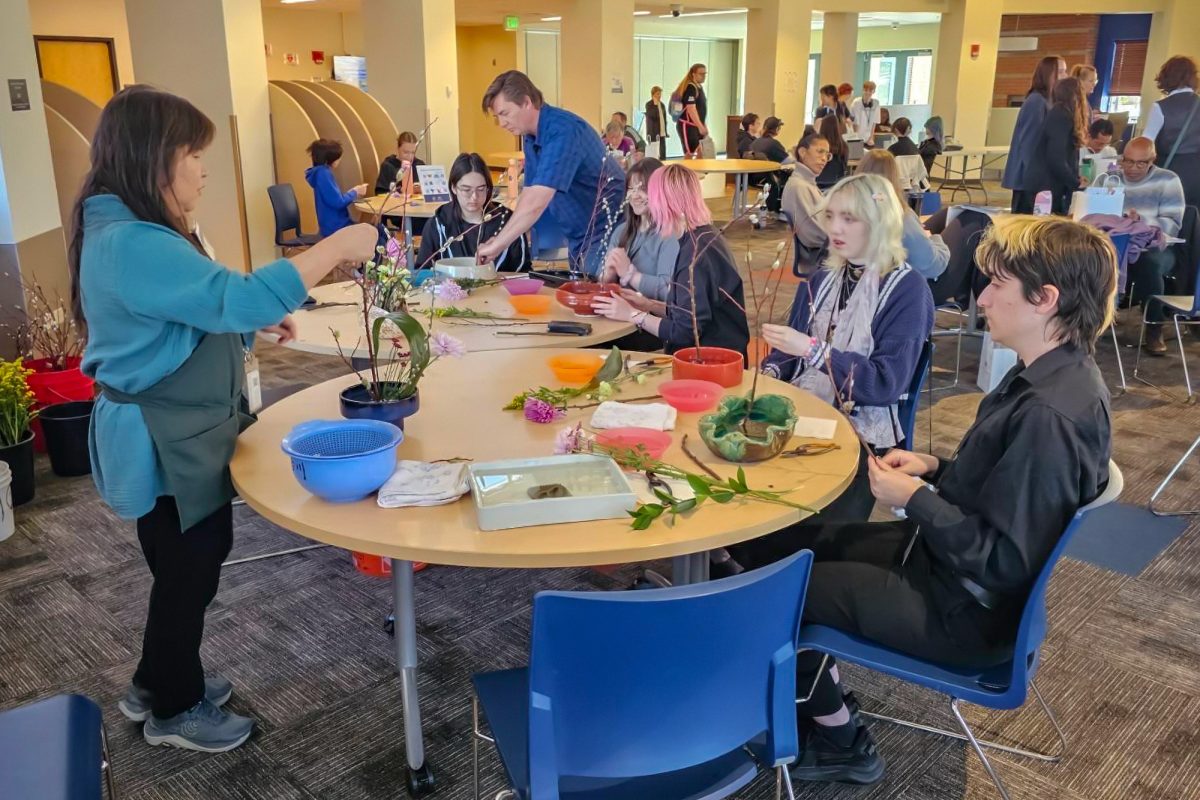
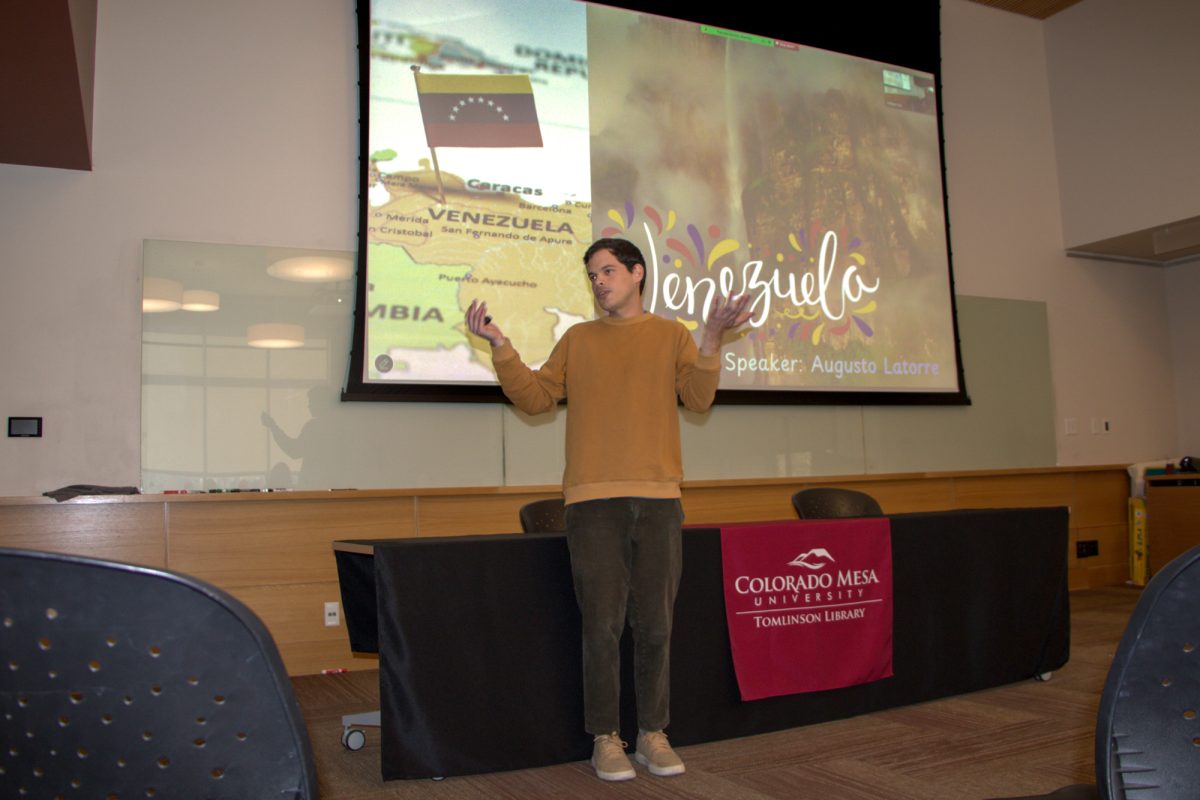
Augusto Latorre from Venezuela held a Cultural Café in CMU’s Tomlinson Library on Feb. 17 Cultural Café invites students, faculty and staff to share stories, photographs and traditions from countries they are from or have visited. The goal is to promote cultural awareness and create dialogue/a voice across campus.
Before taking the stage, Latorre spoke in Spanish and English about why events like Cultural Café matter.
“I think that creating cultural awareness or that people know about cultural diversity and the diversity of the students and the community is important. Diversity is very enriching, and I think it is beautiful to share about my culture, my upbringing, with people and with the community.” Latorre said.
He also encouraged openness toward new perspectives.
“Always approach people you do not know with an open mind. They always have something interesting to say or something you can learn.” Latorre said.
Originally from Caracas, Venezuela’s capital, Latorre said the opportunity came through his roommate, who works at the library.
“This is my first semester. My roommate works at the library and she said, ‘Hey, there’s this opportunity. Would you like to talk about your country?’ I talk about Venezuela plenty, so I thought it would work out. I’m glad to be here and happy to be telling people about my country and my culture,” Latorre said.
The event featured Venezuelan food prepared with assistance from Sodexo, including arepas, black beans and limeade. Attendees gathered before the presentation began, many eager to learn more about the South American country.
“Cultural Café is meant to humanize people through stories and through photographs, and to show how we have a lot of commonalities, not just our differences. It is to expose the community to other cultures and to see where we are all similar,” Carl Smith, head of the Access Services Department at CMU.
Among those in attendance was senior Spanish major Valerie. She said events like Cultural Café help broaden students’ understanding of Latin America.
“These events are important to the university because they represent Latin American culture, and while the culture of Venezuela, Spain and America can be similar, it is also very different, and daily life there is different compared to here in the United States.” Valerie said.
During his presentation, Latorre shared facts about his hometown and Venezuela more broadly. He discussed Caracas, the country’s capital, and highlighted national symbols such as the Venezuelan troupial, the national bird. He also mentioned the country’s second most populated city, Maracaibo.
“Maracaibo is sea level. It’s very humid, and it’s also really rich in oil,” Latorre said.
Latorre spoke about Venezuelan music and traditions, explaining the importance of drums in cultural celebrations and discussing genres such as salsa and joropo, the country’s national dance and musical style. He also addressed the country’s challenges, including inflation and economic instability, offering context about how those realities have shaped daily life.
Sports also play an important role in Venezuelan culture. Latorre highlighted baseball as one of the most popular sports in the country and mentioned toros coleados, a traditional bull related sport.
At the conclusion of the presentation, Latorre played music on the cuatro, a four stringed instrument similar to a ukulele, giving attendees a live example of Venezuelan sound. The room listened closely as the music filled the library space.
He ended with a simple hope that the audience walked away having learned something new about his home country.
Smith encouraged students to attend future events in the series.
“Our next one will feature Italy next month in March,” Smith said.
Cultural Café continues to provide students an opportunity to enjoy international food, learn about different cultures and connect with members of the campus community through shared stories and experiences.