

CMU Moss School of Nursing’s Community Collaborative Poster Event brought students, alumni and faculty together to showcase research driven by the desire to solve real problems in healthcare. From safer cancer care protocols to sensory-informed intimacy education to the future of prosthetics, the event highlighted the range and depth of CMU’s nursing program.
RN BSN Charli Weaver, a 2024 graduate who now works at the cancer center at Valley View in Glenwood Springs, explored whether daily heparin flushes, a common protocol, are always necessary or safe.
“My question was, ‘Is this safe for him…or is there a safer alternative?’” Weaver said.
Her research found that normal saline was “just as effective” at preventing occlusions, and the change saved her department “over $6,300 in one month.” Weaver encouraged others to question protocols similar to this.
“Just because a protocol is put in place doesn’t mean it’s the best way. Keep asking questions,” Weaver said.

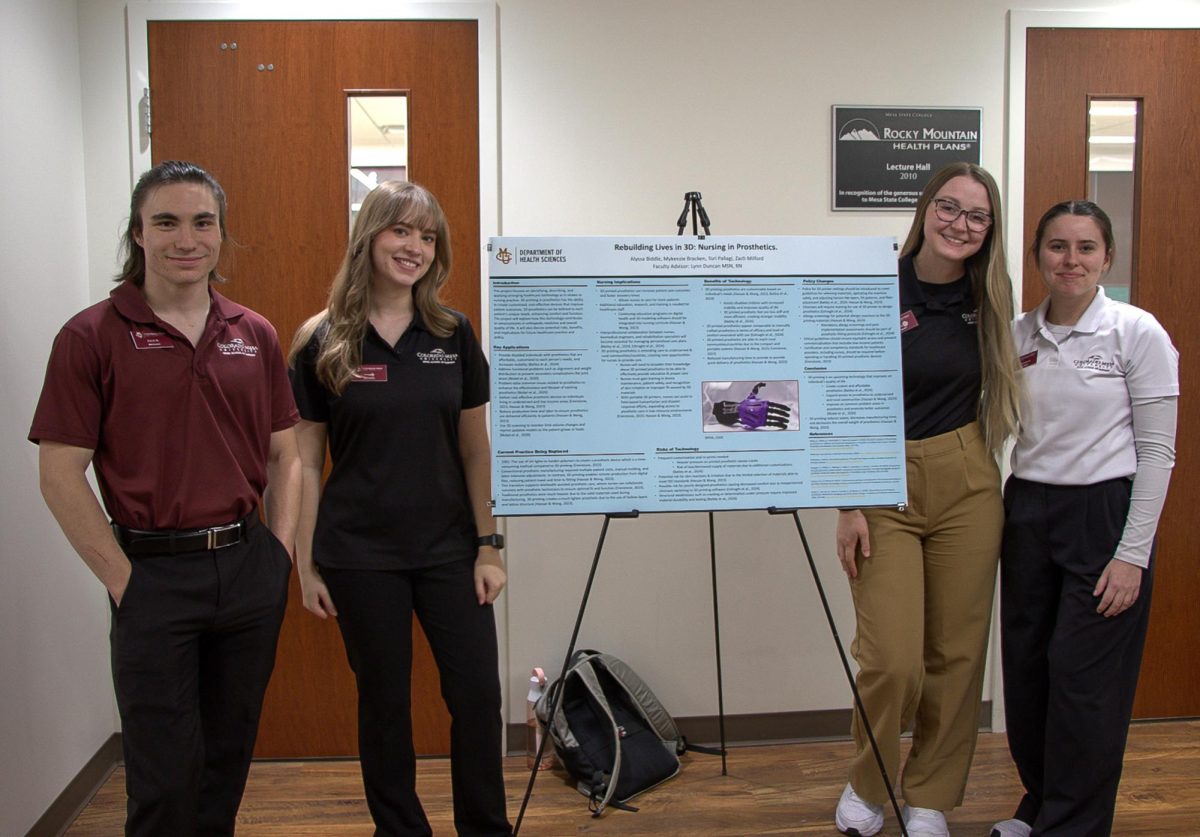
CMU nursing students Zach Milford, Tori Pallagi, Alyssa Biddle and Mykenzie Bracken presented research from a project titled “Rebuilding Lives in 3D: Innovation in Prosthetics.” The project examined how 3D-printed prosthetics are reshaping accessibility and mobility for amputees. Milford explained that 3D printing allows for “lighter-weight designs that are more specific.”
“Older foot prosthetics are rigid,” Milford said. “3D printed prosthetics weren’t as rigid and had better mobility.”
Their research also showed that patients rated traditional and 3D printed prosthetics “equally in terms of comfort,” which means the newer designs are not just innovative, but practical. One of the biggest advantages, according to Milford, is portability.
“With 3D printers, you just need the printer and a computer. You can bring that anywhere, even to some random rural country,” Milford said.
The technology is rapidly evolving, but what they did find was promising in terms of lower costs, faster production, and the potential to reach under-served communities. Pallagi said that a big challenge was limited literature.

“It was just hard to find a broad amount of research,” Pallagi said. “I think we’ll see it in the next five to 10 years everywhere.”