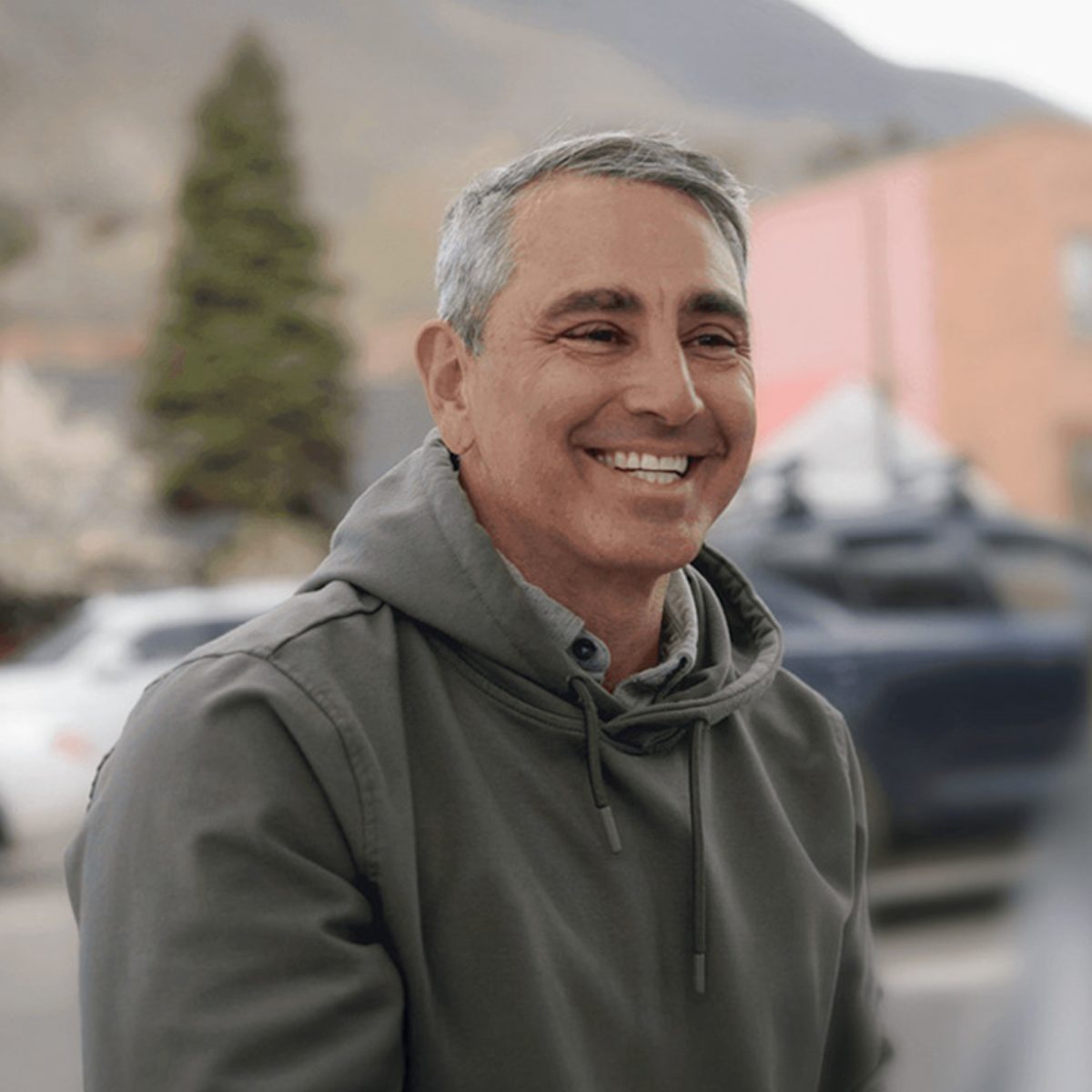


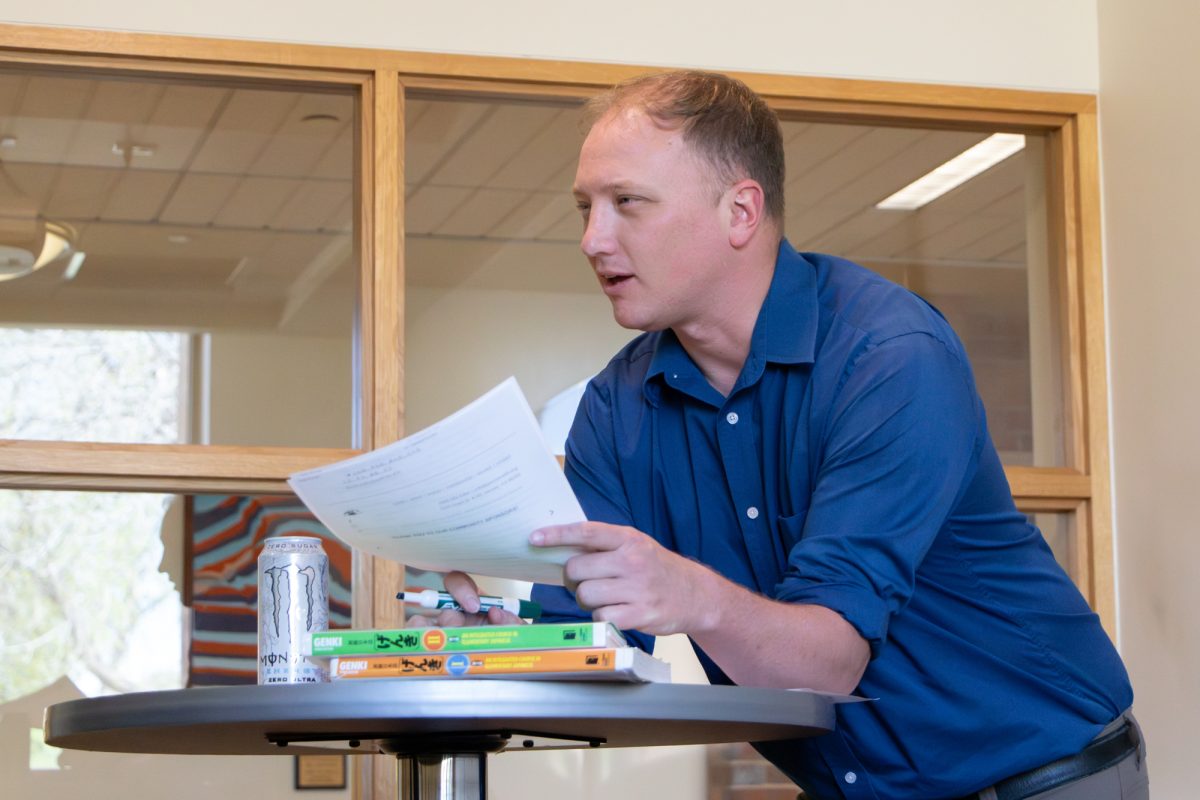
Instructor James Coburn frequently has an office filled with student researchers. His walls are covered in a variety of research progress trackers, calendars and Asian decor. He’s packed a few extra chairs and tables in the room to make sure everyone has a spot to sit.
Coburn is leaving CMU at the end of the spring semester. The archaeology and Japanese professor departs for the University of Tennessee in Knoxville to pursue a doctorate in archaeological studies with a focus on East Asia.
“I always liked Japan. I studied Japanese under the previous professor here, Julie Brew, and she really instilled the passion in me for the language,” Coburn said.
CMU does not have another Japanese lecturer on campus and there are no plans to replace Coburn. Beginning Japanese I and II are not available for registration next semester. Senior music performance major Rob Reid is sad to see Coburn leave.
“I was hoping for a Japan III, like a Japanese language III,” Reid said. “If he wasn’t leaving, that’d be on the horizon.”
Coburn graduated from CMU in 2014 with a history degree and taught briefly during COVID before returning for the spring 2025 semester. He built a research team of ten students and helped a group of students with the Japanese Cup in Denver during his tenure.
His Japanese II class has about 20 students and he isn’t shy about asking them to engage. Coburn will directly call on a student when he asks a question instead of waiting for someone to offer up a response.
He brings a white board and expo marker for every single student. They are expected to mimic the kanji his Teaching Assistant Tag Fortuna draws on the big white board while Coburn lectures.
With a white Monster energy drink in hand, he asks the students to repeat phrases, draw kanji and string together words into more complex phrases.

Coburn’s academic focus is East Asia—specifically Japan and Korea. East Asian studies are rather niche in the US and very few people pursue the subject. Those who do tend to focus on China.
“I love Japanese and Korean archaeology and history and I want to be kind of, a spot where people can go in the future to get training under that,” Coburn said.
His office is filled with East Asian decor, including a bonsai tree under a grow light. Lanterns from a Lunar New Year celebration hang from his ceiling and whiteboards fill his walls to help keep the seven research projects he oversees on track. He will continue to work with his researchers to help them get published in academic journals after he moves to Knoxville.
One student researcher is anthropology senior Zach McKay. He is hopeful that Coburn will have enough time to continue the research.
“I’m doing Japanese architecture at the moment, so I hope to continue doing that to get publications for grad school,” McKay said.
Coburn said his office often doubles as a research lab for students. He spent five years teaching English in Japan and developed a student-first ethos when it comes to education. A timeline made of sticky notes and several rows of washi tape sit on one wall of the office and detail archaeological ceramic types. A white board sits on another wall with cranial measurements. This undergrad research is key for his students to be competitive when they apply for grad school.
“You need to do it for graduate degrees nowadays and graduate programs. A lot of areas you have, like, R1 institutes that are pumping out undergrad research like crazy,” Coburn said.
When he taught at CMU the first time, he took his students to the Japan Cup in Denver. The cup allows different universities to compete in a language skills and comprehension competition judged by the Consulate General and Vice Consulate General of Japan and Denver.
Students who studied the language for only a few months at CMU beat out schools like Colorado University Boulder that have major programs dedicated to Japanese.
“We were kind of a dark horse. We came out of nowhere,” Coburn said. “We had the Consulate General come up and go ‘we didn’t even know your school was a thing and then you came here and you won.’”
Coburn plans to take three teams to the next Japan Cup set for April 18. Coburn said that he would be interested in returning to CMU after he’s done with his program if there is an opening.
“In a divisive world, we see that you know, looking at it from an anthropological perspective, we’re all the same species,” Coburn said. “Learning about other cultures actually makes you more stronger [sic] as a person.”