

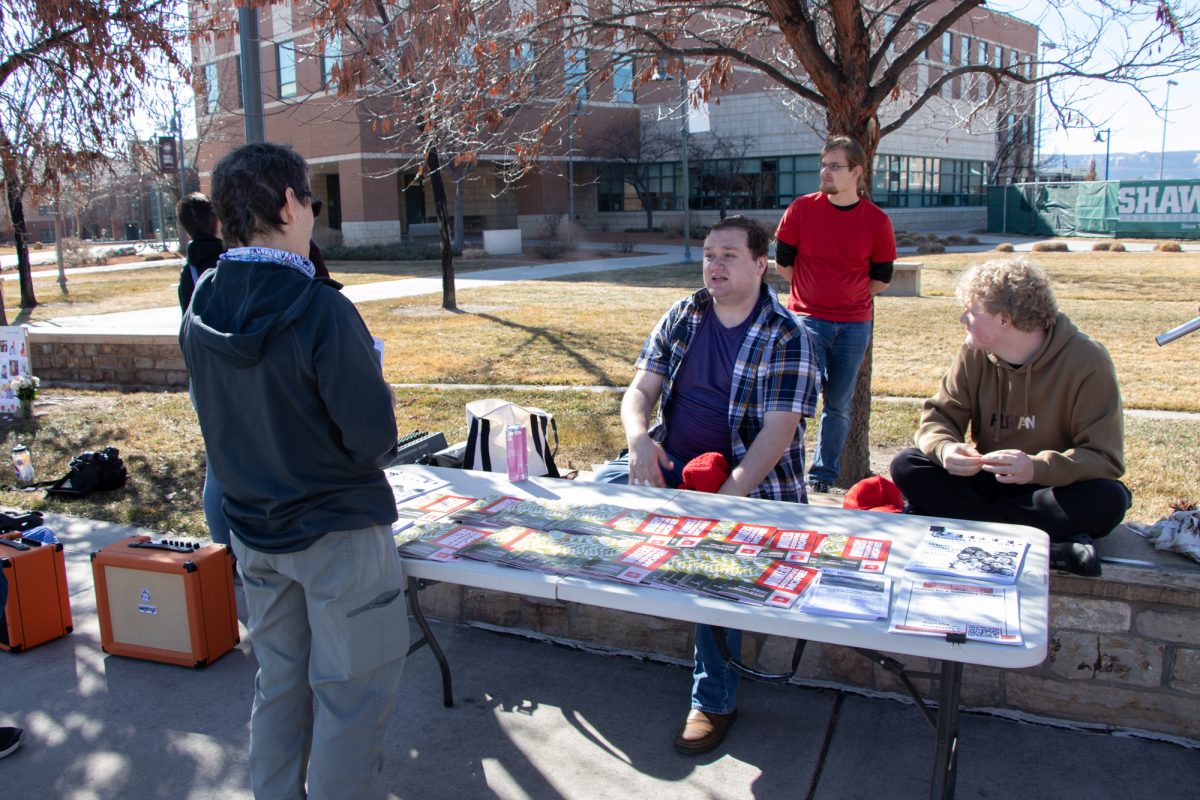
The CMU chapter of the Young Democratic Socialists of America (YDSA-CMU) held a vigil for the victims of Immigrations and Customs Enforcement (ICE) on Feb. 14 in the Plaza. Their vigil is in response to the deaths of several people at the hands of ICE agents in 2026, including Renée Good and Alex Pretti in Minneapolis.
Vice President of Student Services, Dr. Roberto Montoya, declined to comment on the subject of ICE on campus and deferred the Criterion’s staff to speak with CMU’s Marketing Department.
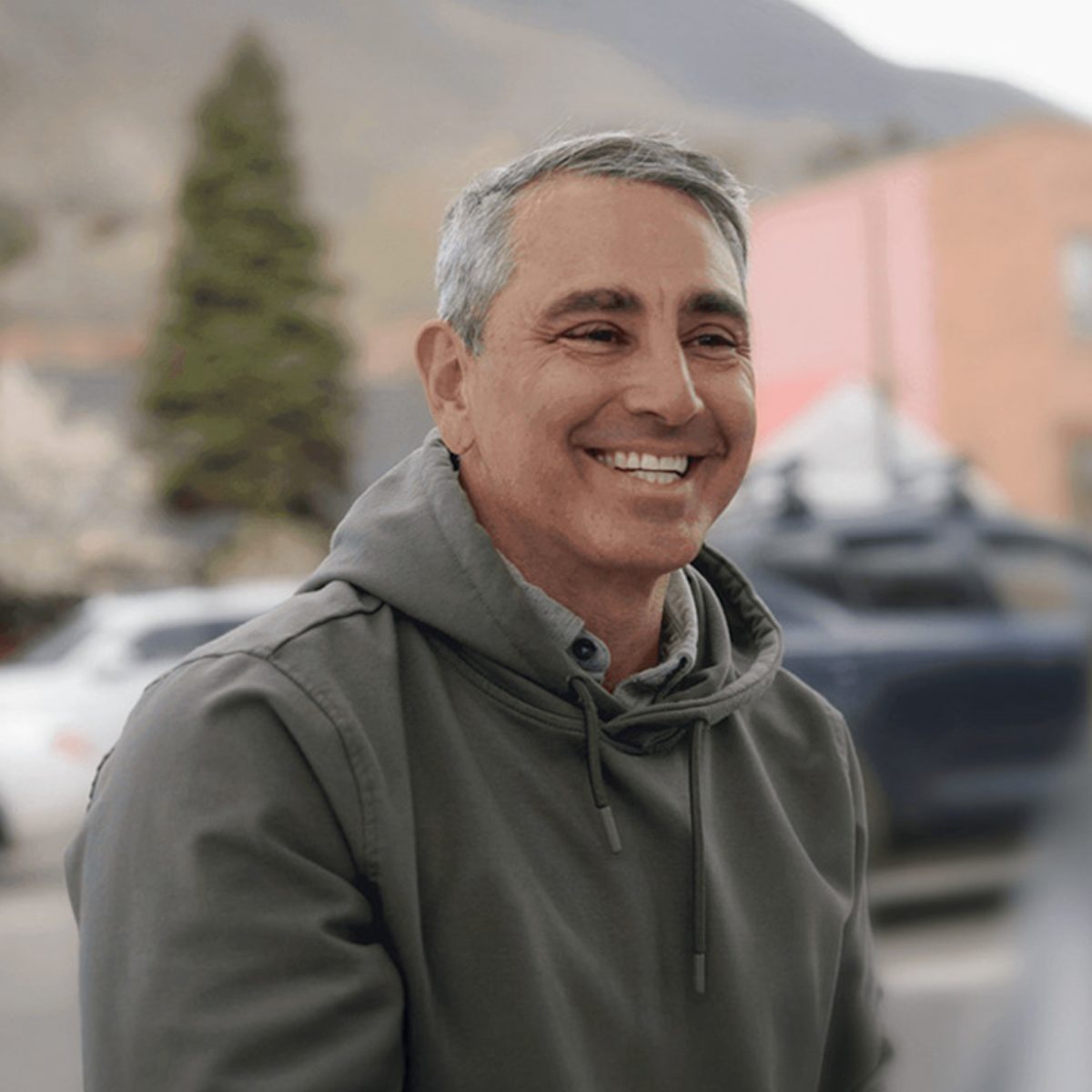
When asked about what CMU must do in the case of ICE agents coming to campus, Senior Vice President of Communications, David Ludlam, explained the situation the university would find itself in.
“CMU students, faculty and staff are not required to assist law enforcement in their statutory duties. CMU also wouldn’t obstruct any law enforcement agency executing a judicial warrant or subpoena, Ludlam said. “Individuals have their own agency on a campus that values free expression and acknowledges the responsibility that comes with that expression in relation to law enforcement.”
The Department of Homeland Security (DHS) saw six resignations after the murder of Good and the administration’s decision to investigate Good’s partner instead of the agents that shot her. Good was originally from Colorado Springs.
Nearly 33 ICE-related shootings have been recorded since the beginning of 2025, according to data compiled from the American Immigration Lawyers Association, American Civil Liberties Union, American Oversight and Physicians for Human Rights.
One incident took place in Black Forest, Colorado on July 31, wherein an ICE agent fired three gun shots at two people in a vehicle. The encounter ended in the arrest of one of the drivers.
DHS contested these figures and accusations.
YDSA-CMU co-chair Nikoli Weir said the vigil intended to raise awareness about the increased presence of ICE.
YDSA-CMU treasurer Brock Remley also said it feels like there are more ICE agents than citizens because of news coverage, but that they do not see this as accurate.
“We outnumber them a thousand to one,” Remley said.
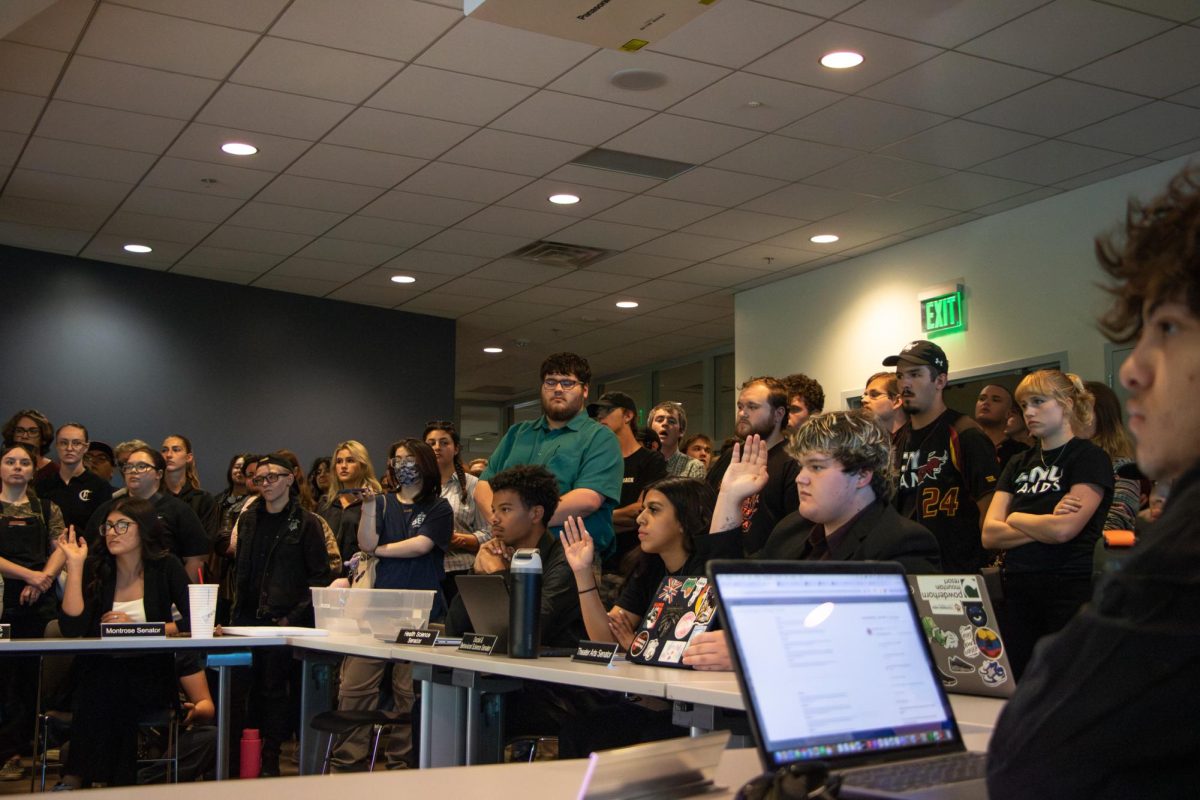
The vigil featured posters with the faces of victims that died either during altercations with ICE agents or in their custody while being detained. There was an opportunity for attendees to voice their opinions, concerns and feelings about the increased fatalities associated with ICE.
YDSA-CMU co-chair Kaylee Mullens said the club’s broader goals are to “spread political education, help out the community, advocate for a better life for all working-class Americans, all working-class people of the world.”
YDSA-CMU has also been trying to get CMU designated as a “sanctuary campus.” This title would be a commitment from CMU to limit cooperation with federal authorities, such as ICE, in an effort to protect undocumented students, staff and faculty.
President John Marshall explained that universities, especially public institutions like CMU, are often beholden to the whims of whichever side of the political aisle the current government administration falls on.
“I remain consistent in my frustration that institutions of higher education and our students experience the impacts of decades of insufficient and poorly planned policymaking at the federal and state levels. Incoherent and conflicting state and federal policies are the responsibility of lawmakers,” Marshall said. “CMU and the students we serve deserve better.”
Marshall further affirmed that CMU must comply with law enforcement above all else.
“I mean, our policy is always going to be to comply with the law,” Marshall said. “That is an insufficient description of the entirety of what it is at the university […] but, whether we agree or disagree with a whole host of different things, our task is to comply with the law.”
The Supreme Court approved an emergency request from the Trump Administration on Sept. 8, 2025 for ICE to resume racial profiling when conducting investigative stops. The request outlines the following factors, in addition to reasonable suspicion, as potential grounds for a stop: “(i) presence at particular locations such as bus stops, car washes, day laborer pickup sites, agricultural sites, and the like; (ii) the type of work one does; (iii) speaking Spanish or speaking English with an accent; and (iv) apparent race or ethnicity.”
Legally speaking, reasonable suspicion would normally not pertain to any of the following factors the Trump Administration requested special approval for, according to the American Immigration Council. The fourth amendment also protects
One alliance apart of CMU’s Cultural Inclusion Council (CIC) is the Latino Student Alliance (LSA). They protested the presence of ICE on campus at the CIC Fashion Show on March 7 with a slideshow and large group demonstration. The fashion show’s audience clapped and hollered following LSA’s public display.
During YDSA-CMU’s open mic sessions at the vigil, attendees expressed similar opposition and sentiments, such as ICE “going too far” and slowly turning into “the American gestapo.” Attendees said that ICE’s current actions reflect the exertion of power and control of people in the U.S. and not aimed at immigration management.
“The highly visible nature of ongoing clashes and tensions between communities and federal law enforcement means that there are no doubt concerns among students and their families,” Ludlam said. “To date, these concerns have not been formalized in how they are directed at CMU as an institution.”
Assistant Professor of Political Science Dr. Holly Oberle shared her thoughts and expertise on foreign policy and international relations. She also shared what she has heard about ICE activity in the Grand Valley.
“I heard that there has been some activity, especially around Grand Junction High School (GJHS), and that’s obviously not that far geographically,” Oberle said.
Over 250 GJHS students gathered at their schools’ commons and marched from N 12th St to 1st St on Feb. 1 in protest of ICE. Several students also expressed their disappointment regarding District 51’s (D51) response to the handling of a hypothetical ICE presence at a D51 School Board meeting on Feb. 18.
CMU does not appear to be privy to these local events.
“CMU wouldn’t be privy to federal law enforcement action in the Grand Valley outside of what would be formally communicated to CMU’s Director of Campus Safety from law enforcement agencies when agency action might impact campus operations,” Ludlam said.
Oberle described lost elements in the current discussion of immigration and the enforcement of immigration policies in the U.S. today.
“The fact of the matter is that most immigrants, both legal and undocumented, are often coming here not because they’re criminals, or even that they’re intending to commit crimes. I think, again, undocumented does not necessarily mean that the person intended to commit a crime or intended to fall on the wayside of the law, let’s say,” Oberle said. “I just think that a lot of nuance and a lot of lived experiences get lost.”
CMU currently offers financial support for undocumented students through the Colorado Application for State Financial Aid (CASFA) and Colorado’s state-wide Advancing Students for a Stronger Tomorrow (ASSET) program. A Colorado law amended the ASSET program in 2013 to include undocumented students as eligible for enrollment.
Oberle wants her students to be safe and feel valued in her class, both academically and personally. She considers it a safe space for her, as well as her students.
“As for me, as a professor, you know my classroom is sort of my one space of sovereignty: I get to create the syllabus, which is sort of the constitution of the class, I get to set certain rules of course, those rules have to be in compliance with a variety of other rules, but that is sort of my space. That is a space that I try to make safe both for myself personally but all of the students for those hours, or however long it is that we’re in the class,” Oberle said.
YDSA-CMU is hosting another ICE related event on Friday, March 27. Starting at 2:30 p.m., club members and attendees will march from the corner of 12th St and North Ave to the pavilion outside the University Center. The club’s “CMU Melts ICE: A Rally, March and Fundraiser in solidarity with Minnesota” will donate any raised funds to support families negatively impacted by the detainment of one of their family members by ICE.