

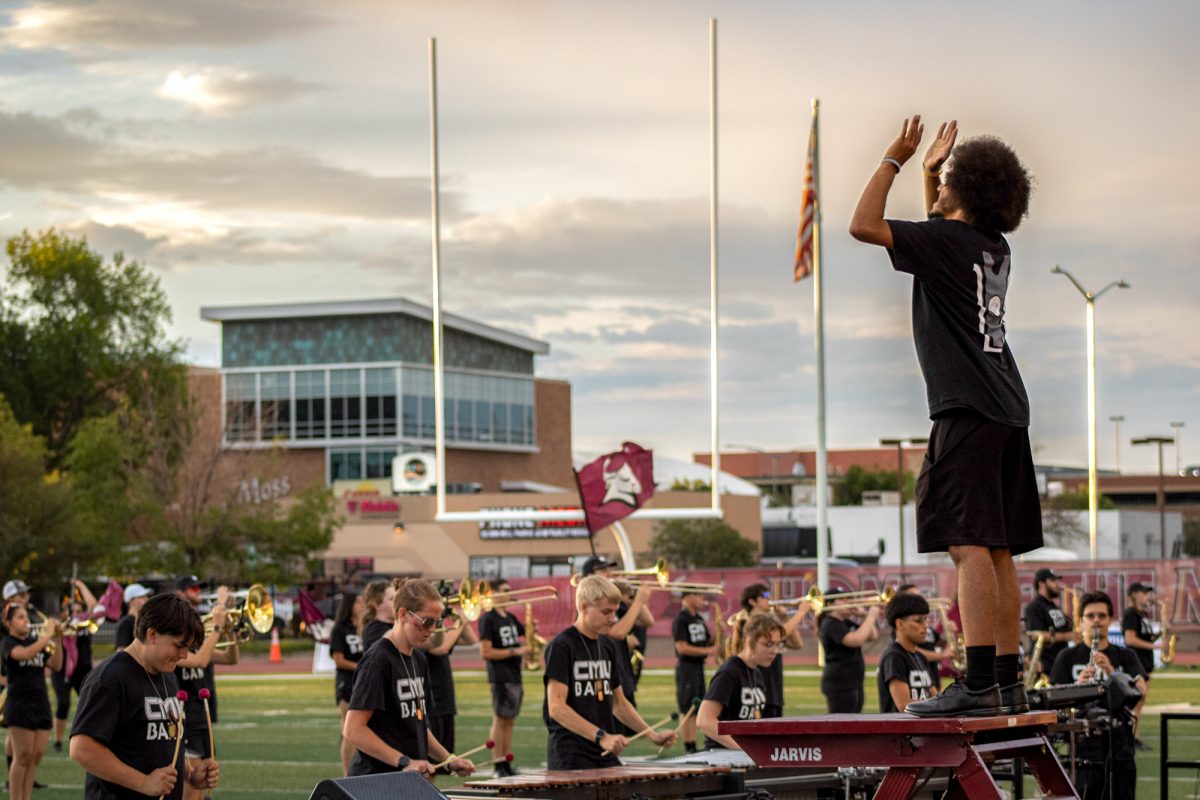
From meeting on campus a week early to begin rehearsals, to performing multiple rehearsals a day in 100-degree heat, marching band members push themselves to deliver engaging, skillful shows. With the marching season at CMU recently coming to an end on Nov. 8, the ever-present debate has resurfaced once again: Is marching band a sport?
Almost everyone can agree that memorizing music and precision marching require high levels of concentration, as well as mental and physical determination. Adding the word “sport” to the mix has people hesitating—even some Maverick Stampede members waver on defining their craft as such.
“A sport, to me, is like a one-on-one competition. I think that we are more of an athletic art,” said junior psychology major and head Drum Major Averee Toft.
When junior tuba performance major and Band Captain Martin Faut was asked if he thought marching band was a sport, he did not hesitate in saying no.
“I think sports have to be able to be objectively defined. There’s a very strict winner and loser when it comes to a sport like football or baseball—either you scored the point, or you didn’t. When it comes to marching band, it’s all subjective. There are so many different levels and kinds of marching band, so many different experiences and variables, while a sport is kind of always a sport.”
Faut has spent three seasons in world-class competitive drum corps, including the 2024 season with the Bluecoats.
“[Marching band] is athletic, its an art form, but we don’t need to be a sport. Why should we care about being defined like that? I don’t think [marching band] being hard—and it is hard, you’re asking your body to do things it would never, never normally do—should have anything to do with its definition of a sport. If you’re not doing it for the love of the game, why are you doing it?”
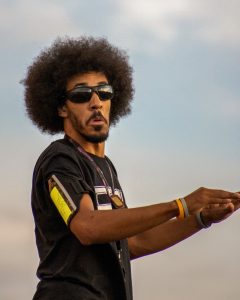
However, fifth-year music performance major and co-drum major Rob Ried was quick to take the other side of the argument.
“Marching band is absolutely a sport. Just like football, there are drills, practice, movement and exercise. And adding music makes it even more difficult. We memorize it and learn it on the fly, and it’s hard music too. A lot of us have to carry heavy instruments—drumline specifically has to carry up to 45 extra pounds.”
Sophomore biology major and piccolo Section Leader Isobel Schwartz agreed with Ried’s sentiment.
“At the end of marching, if you’re not out of breath, or if your calves aren’t burning, you’re not doing it right. In order to be a good marcher, you do have to put work into it. Just the amount of activity required is enough to call [marching band] a sport.”
Athletic art, sport or its own thing entirely, the book won’t be closed on finding marching band’s true definition. Marching band may not fit everyone’s traditional idea of a sport, but the unique challenges and high demands that it requires call for a reexamination of what athleticism can look like.



![According to club advisor Dr. Megan Wendler, “Math Club is meant to be a fun, welcoming community where people can come and learn some really cool things about math. [...] Every Spring, [Math Club] organizes a Math Extravaganza event"](https://thecrite.com/wp-content/uploads/2026/02/math.club-john.leet-3-E-web-1200x800.jpg)